Summary
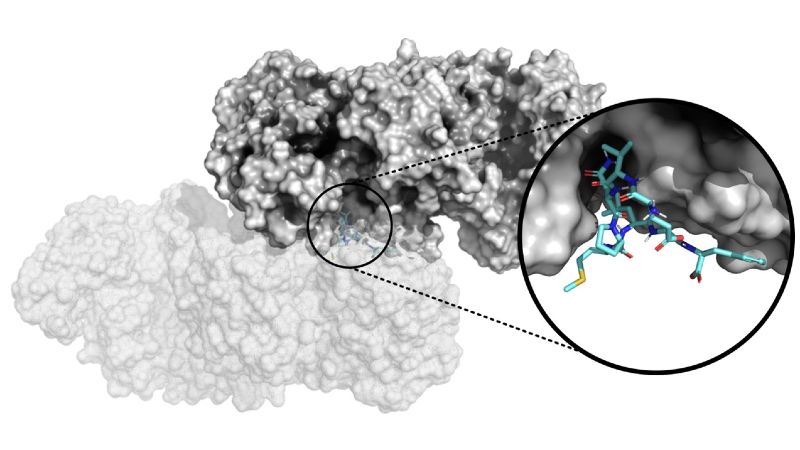
Developing sustainable and selective weed control remains a major challenge in modern agriculture. Interfering peptides (iPs) offer an innovative and environmentally friendly alternative to chemical herbicides. Although intensively studied in medical research, their potential to influence plant metabolic pathways is still largely unexplored. The InterPepHerb project investigated whether iPs can inhibit key enzymes of the C4 photosynthesis pathway, which is common in many weeds but absent in most crops. Through bioinformatics and biochemical screening, several iPs were identified that specifically bind to and inhibit pyruvate-phosphate-dikinase (PPDK), an essential C4 enzyme, reducing its activity by up to 42%. In addition, a sustainable production system for peptides longer than 20 amino acids was established, combining microbial expression with enzymatic processing to generate bioactive iPs. Germination assays, serving as whole-plant tissue tests to assess peptide uptake and physiological activity within the organism, showed that the peptide iPBD18 almost completely suppressed germination of the C4 weed Amaranthus hypochondriacus (99.4%), while other iPs reduced germination by 15–42% without affecting the C3 crop Brassica napus.
Overall, the project demonstrates that peptide-based biotechnologies can provide targeted, eco-friendly weed control and represent an important step towards species-specific, environmentally friendly herbicides.
Meike Sauerland
Biochemical Plant Physiology
HHU Düsseldorf
email: meike.sauerland[at]hhu.de
Prof. Dr. Georg Groth, Biochemical Plant Physiology, HHU Düsseldorf
Prof. Dr. Laura Hartmann, Organic and Macromolecular Chemistry, HHU Düsseldorf
Prof. Dr. Ulrich Schwaneberg, ABBt - Biotechnology, RWTH Aachen
01.10.2023 - 31.12.2025
InterPepHerb is part of the NRW-Strategieprojekt BioSC and thus funded by the Ministry of Culture and Science of the German State of North Rhine-Westphalia.
About BioSC
Contact
Imprint
Data protection
© BioSC
BioSC-Geschäftsstelle
c/o Forschungszentrum Jülich
52425 Jülich
biosc@fz-juelich.de