Summary
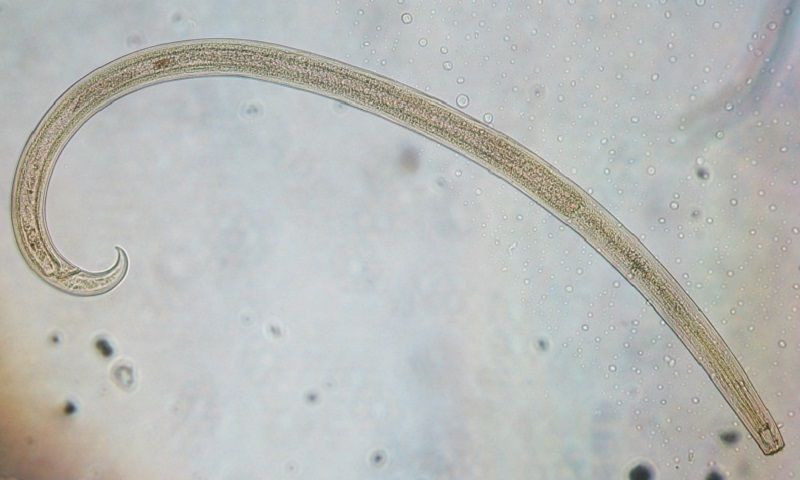
The SEED FUND project “ProRNA” was a proof-of-concept-study about microbial dsRNA production and exploring applications of dsRNAs as a new non-chemical strategy for the practical control of plant-parasitic nematodes (PPNs) via RNA interference (RNAi) to protect crops and improve plant health in agri- and horticulture. As relevant plant-nematode pathosystems, Arabidopsis thaliana and Daucus carota (carrot) and the PPN species Meloidogyne incognita and M. hapla were selected as models.
For Meloidogyne, we found up to 20 dsRNAs in the literature mainly from M. incognita and reported to be effective on M. incognita via RNAi in vitro. For the majority of these dsRNAs we found the respective target gene sequences also in the genome of M. hapla supporting their general relevance in Meloidogyne species. The respective gene functions representing the three functional subgroups neuropeptides, effectors, and enzymes involved in the metabolism or replication affect root infection, gall formation, number of produced eggs and the reproduction.
Selected dsRNA sequences were successfully obtained from M. hapla and M. incognita total RNA samples by cDNA generation and PCRs for both subsequent in vitro dsRNA production and for cloning of microbial dsRNA expression plasmids used for microbial in vivo dsRNA production. For the latter, a Corynebacterium glutamicum strain equipped with T7 RNA polymerase expression system was chosen and respective dsRNA expression strains were successfully constructed.
In vitro-synthesized dsRNA samples and microbially produced dsRNA samples were generated and tested in different assays. In in vitro soaking assays with M. incognita the mRNA expression levels of several targets, especially the Mi-flp18 and Mi-cpl levels, were strongly reduced by up to 70% in nematodes treated with the corresponding dsRNA, indicating the functionality of the soaking assay setup and corroborating published dsRNA-RNAi results. In in vitro infection assays with M. incognita and A. thaliana, we could demonstrate that nematodes soaked especially in in vitro-synthesized dsRNA targeting and downregulating transcripts of the neuropeptide gene Mi-flp18 caused a significantly reduced number of galls on A. thaliana, underlining the pivotal role of the Mi-flp18 neuropeptide. To show this regulation effect for microbially produced dsRNA samples including the dsRNA targeting Mi-flp18 further studies on specific microbial dsRNA sample requirements, assay conditions and sample applications are necessary to analyse the RNAi effects and finally the resulting impact on the infection potential of Meloidogyne.
In summary, in vitro RNAi assays, in vitro plant infection assays and scalable microbialdsRNA production in vivo were established and optimized. This provides the foundation for further analyses to explore the applications of dsRNA formulations as a new non-chemical strategy for the practical control of PPNs to protect crops and improve plant health in agri- and horticulture.
Dr. Tino Polen
IBG-1: Biotechnology
Forschungszentrum Jülich
email: t.polen[at]fz-juelich.de
Prof. Dr. Michael Bott, IBG-1: Systems Biotechnology, Forschungszentrum Jülich
Prof. Dr. Grundler & Dr. Schleker, INRES - Molecular Phytomedicine, University of Bonn
01.02.2022 - 31.05.2024
ProRNA is part of the NRW-Strategieprojekt BioSC and thus funded by the Ministry of Culture and Science of the German State of North Rhine-Westphalia.
About BioSC
Contact
Imprint
Data protection
© BioSC
BioSC-Geschäftsstelle
c/o Forschungszentrum Jülich
52425 Jülich
biosc@fz-juelich.de