Congratulations to Uwe Conrath on his review in Nature Plants, where he comprehensively highlights the parallels between systemic resistance in plants and acquired immunity in mammals. The similarities between the two mechanisms offer considerable potential for changing both agricultural practices and medical therapies, for example with the development of innovative crop protection strategies and the optimization of vaccine approaches.
more
Congratulations on the paper “A Sustainable Method for Potato Side Stream Valorisation to Obtain Steroidal Glycoalkaloids within a Bioeconomy Approach“. The study shows how plant by-products can be used as a source of valuable natural substances without competing with food production, and makes an important contribution to the further development of sustainable processes in natural product chemistry.
more
‘The rocky path from research to commercialisation of biosurfactants’ was impressively described by Wim Soetaert in the 34th BioSC Lecture on 12 September 2025. The BioSC Lecture was also a keynote lecture at the Biosurfactants Conference 2025 at RWTH Aachen University.
more
Around 22,000 visitors came to Forschungszentrum Jülich on 7 September to take a look inside the campus. BioSC was there with a large bioeconomy product exhibition and many current research results from ongoing projects.
more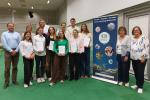
For the fourth time in a row, the lecture series "Meet the Circular Economy" took place at RWTH Aachen University in the summer semester of 2025 under the direction of Prof. Dr. Sandra Venghaus, supported by the BioSC and others. The lecture series was followed for the second time by an Innovation Challenge, in which students developed proposed solutions for current challenges faced by the participating companies and industries and presented them to a jury on July 8.
more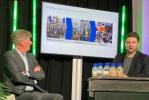
At the opening of the new exhibition “The future grows back” in the Oecher Lab on 29 April, poetry slammer Oscar Malinowski spoke with BioSC members Prof. Dr. Andreas Jupke, process engineer at RWTH Aachen University, and Dr. Marcel Gaussmann, co-founder of the start-up re.solution. The entertaining talk focused on the prerequisites for the bioeconomy and the circular economy and the specific example of textile recycling. The combo of the RWTH BigBand provided musical support for the evening.
moreAbout BioSC
Contact
Imprint
Data protection
© BioSC
BioSC-Geschäftsstelle
c/o Forschungszentrum Jülich
52425 Jülich
biosc@fz-juelich.de